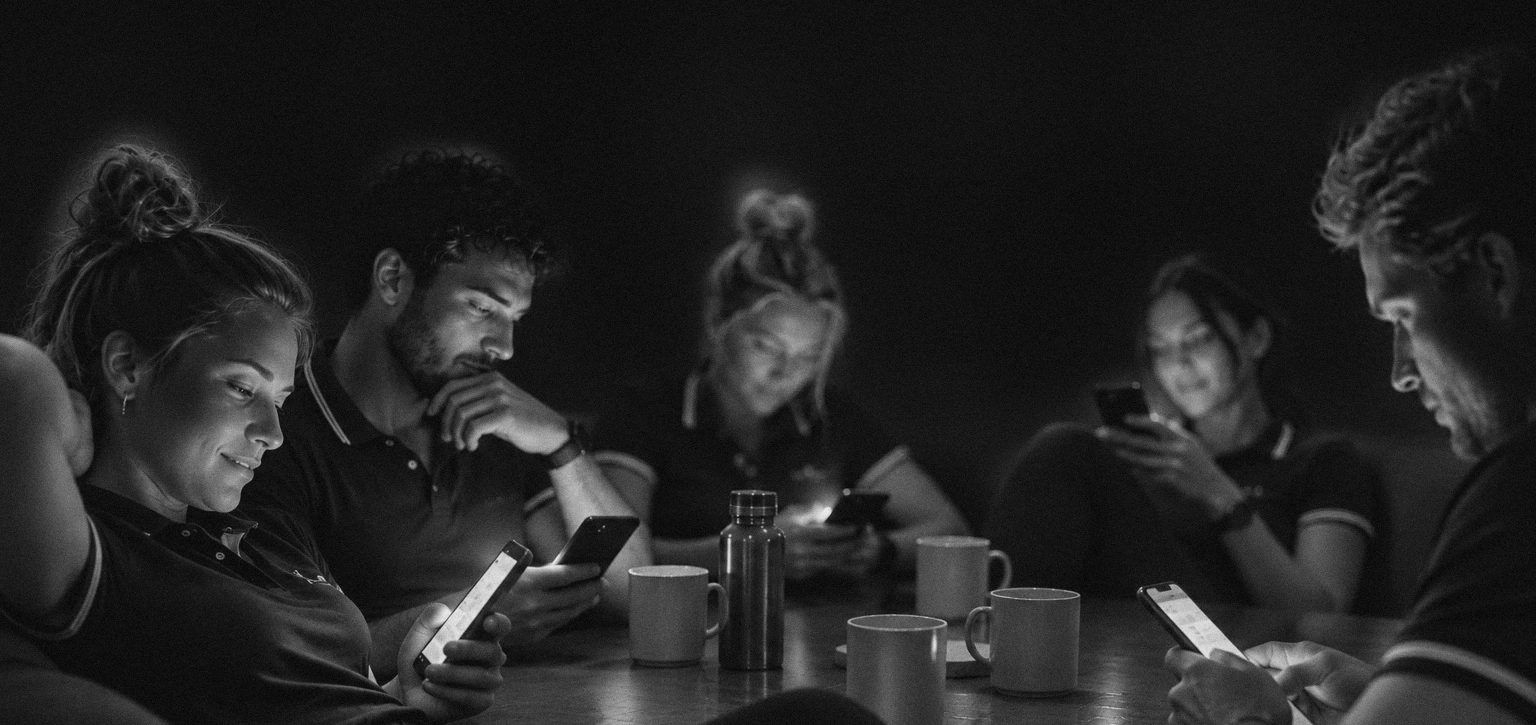
For stewardesses and the rest of the interior team there’s another layer. On many charters the guest WhatsApp group has become part of service, with requests landing at any hour and an unspoken pressure to reply within seconds. It’s useful, and it also means the phone rarely leaves your pocket, even on a break.
For a sole stewardess, the phone often becomes a companion too. When you run the interior on your own, there may be no one to unwind with at the end of service, and that little screen fills the quiet. It’s good company to have, and so is a cup of tea with the chef or a call to a fellow sole stew on another boat.
When your phone is both your work radio and your escape, switching off becomes a real skill.
Just One More Scroll
Finding it hard to put your phone down says more about the apps than about you. Social media and streaming platforms are built by very clever people to keep us scrolling, with endless feeds, little rewards and the next video already playing.
Add yachting to the mix and the pull gets stronger. After a fourteen-hour day your brain wants something easy. Other yachties post the glamorous side of the job while you’re elbow-deep in laundry. And there’s always that urge to check, just in case something important has come through.
“
Some of the best moments on board never make it onto a screen.
Then there’s FOMO, the fear of missing out, and crew feel it more than most. A season away means weddings, birthdays, new babies and Sunday lunches with friends all arrive through a screen, and scrolling feels like the one way to stay part of it. Putting the phone down can feel like letting go of home for a while.
Doomscrolling on board is what happens when tired people meet very persuasive technology. Seeing it that way makes it much easier to be kind to yourself about it.
Eyes Up, Heads Up
The good news is that small changes give back far more than you’d expect, for your own wellbeing and for the whole crew.
Sleep comes first. In a shared cabin, a bright screen at midnight affects two people, and a screen-free wind-down helps those precious rest hours really count.
Then there’s attention, in every department. Being fully switched on keeps everyone safe on deck, on the tender and around the water, and it’s what lets you spot a guest’s needs before they’ve said a word: the guest who’s chilly and would love a wrap, the child who’s had enough of the beach. A safe boat and great service both come from crew who are fully tuned in. A phone tucked away on duty also keeps guests’ privacy safe, a big part of why owners trust their crew.
There’s a practical side, too. I’ve seen deckhands get through a couple of phones in a season, caught on them mid-duty, slipping them hastily into the wrong pocket, only to hear the splash as they disappear over the side. Somewhere at the bottom of the Med, there’s quite a collection.
And there are the friendships. The crew who carry you through a hard season are usually the ones you got to know over a late cup of tea, a walk ashore or a silly game in the mess. Those moments need a little space to happen.
A Few Changes Worth Trying
Screen Time on Board
Pick one or two ideas that suit your boat and your rotation, and see how you feel after a couple of weeks.
- Give your phone its own bedtime. Charge it away from your bunk if you can, and let a simple alarm clock wake you.
- Daylight before data: keep the first ten minutes of your break phone-free, with a coffee on deck, a stretch or a chat with whoever’s around.
- Suggest a voluntary phone basket at crew dinner, even just once a week, agreed as a team so anyone waiting on family news or on call can stay reachable.
- Swap one scroll for one proper call home.
- Tidy your notifications so only the people and apps that matter can reach you.
- Make your time ashore count: a swim, a walk, a new café, phone in your bag.
- Notice how you feel after a scroll. If it leaves you flat, that’s useful to know.
Small habits, kept up steadily, are where every lasting digital detox begins.
Less Screen, More Seen
If you lead a team, your own habits set the tone more than any rule. Crew notice when you put your phone away at dinner, or step outside for a call instead of scrolling at the table.
It’s worth agreeing a few gentle norms together. Set up a simple rota for who looks after the guest WhatsApp group, with a clear handover, so everyone gets proper time off and no request slips through the gap. It also helps to talk about phones at the start of the season, before any frustration has a chance to build. Teams that shape their own guidelines tend to keep them.
Back to Being Present
Picture that crew mess again at the end of the same long day, only this time a couple of phones are sitting in the basket, someone is telling a story that has the whole table laughing, and the call home is happening up on deck under the stars.
Phones are part of the yachting world, and that’s a good thing. The aim is simply that yours adds to your season rather than quietly taking from it. If you’re curious, take a peek at your screen time tonight and see which change appeals.
And if your phone has become a way of coping with loneliness or worry, Yacht Crew Help, ISWAN’s free helpline for crew, is there 24 hours a day.