So the jump has been made, swapping land-based life for life at sea!
The essential courses are done, and perhaps a useful extra or two:
- STCW Basic Safety Training: basically “How Not to Sink 101.” A few days of hands-on training where you’ll learn how to get into a liferaft, put out fires and give basic first aid. Almost everyone working onboard needs this.
- ENG1 Medical (or an accepted equivalent): an approved doctor assesses whether you’re medically fit for life and work at sea, from your eyesight and hearing to your general health. Whether you’ll feel seasick on day one is another matter!
- Food Hygiene Level 2: a handy extra rather than a universal requirement, though many yachts and roles ask for it, since interior crew handle food and drink every day. It shows you can serve safely, without giving a guest a story to tell.
For everything you need, see Before You Book a Yacht Stewardess Course. And if you’re still at the very beginning, my guide on how to become a yacht stewardess covers the first steps.
Getting Ready to Apply
You’ve completed your yacht interior course of choice, and here you are fine-tuning your CV, registering with the agencies, scouting through yacht crew websites and collecting subscriptions.
- A photo that looks like you on a good working day: smiling, natural make-up, neat hair, a plain white or navy collar, taken in daylight against a simple background.
- Contact details at the top, including where you are right now, so a Chief Stew knows you could start tomorrow.
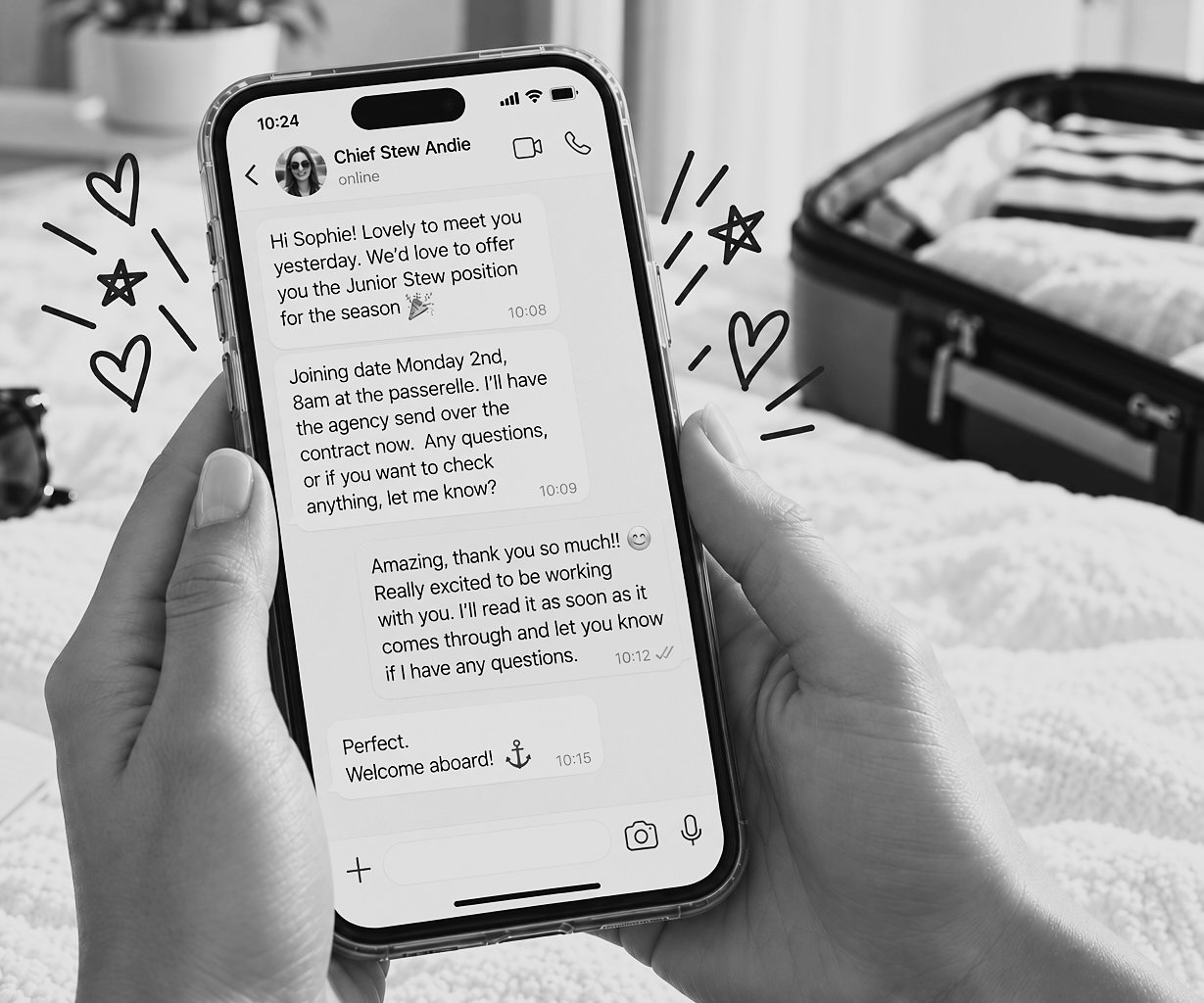
- Your WhatsApp number with the country code. Many Chief Stews message rather than call.
- Nationality, passport and any visas, so it’s clear where you’re able to work.
- Your certificates listed clearly: STCW, ENG1, Food Hygiene Level 2 and PDSD if you have it.
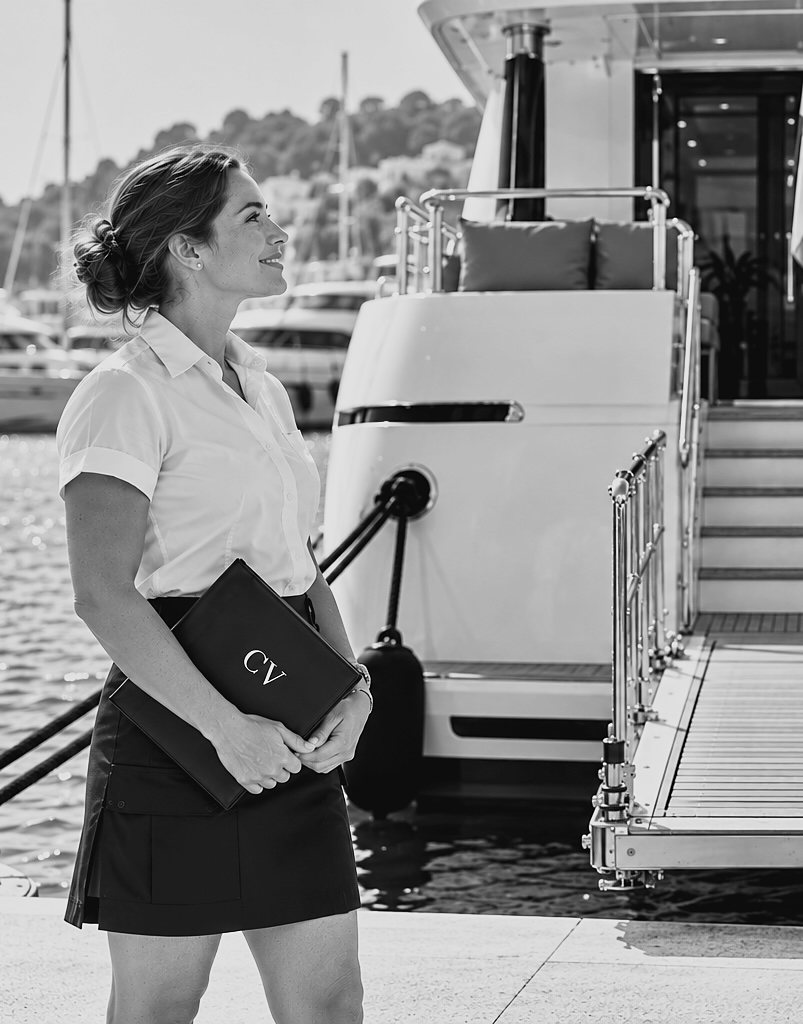
- A short, warm profile of two or three lines, written as if you’re introducing yourself at the bottom of the passerelle.
- Hospitality experience in yachting terms: “waitress” becomes fine dining service, wine knowledge and guest relations, and hotel housekeeping becomes attention to detail, fabric care and room presentation.
- Hobbies with a purpose. Flower arranging, cocktails, languages or yoga are great conversation starters, and one of them might be exactly what a yacht is looking for.
- One page, saved as a PDF and named with your name and role, such as Sophie_Smith_Stewardess_CV.pdf, so it’s easy to find in an inbox of fifty others.
- Two or three references with phone numbers and emails, and a quick message to give them a heads-up a call may be coming.
Getting Seen
Your CV can travel the world by email, and agency registrations and online applications land plenty of first jobs. It also helps to be where the boats are, just before the season kicks off:
- The Med (spring and summer): head to Antibes in France or Palma in Spain, around April.
- The Caribbean and US (autumn and winter): head to Fort Lauderdale, around October.
Before you book that flight, check your right to work, because it depends on your passport. EU, EEA and Swiss citizens can look for work and do daywork across Europe. Most other nationalities, including UK citizens, need a job offer or contract in place before they arrive. In the US, a B1/B2 visa covers working onboard a foreign-flagged yacht, rather than travelling there to look for work. Rules change, so check with your agency or the relevant embassy before you fly.
Paperwork first, polishing second!

If you have the right to work where you are, dockwalking is another route in, and it puts a face to your name. Dress in a neat polo and shorts, walk down to the marinas and hand your CV to the crew onboard. You’re hoping to land daywork: temporary work, paid by the day, usually cleaning or prepping. Daywork is still work, so have your passport and certificates ready to show. Done properly, it’s a brilliant way to get your foot in the door and build a network.