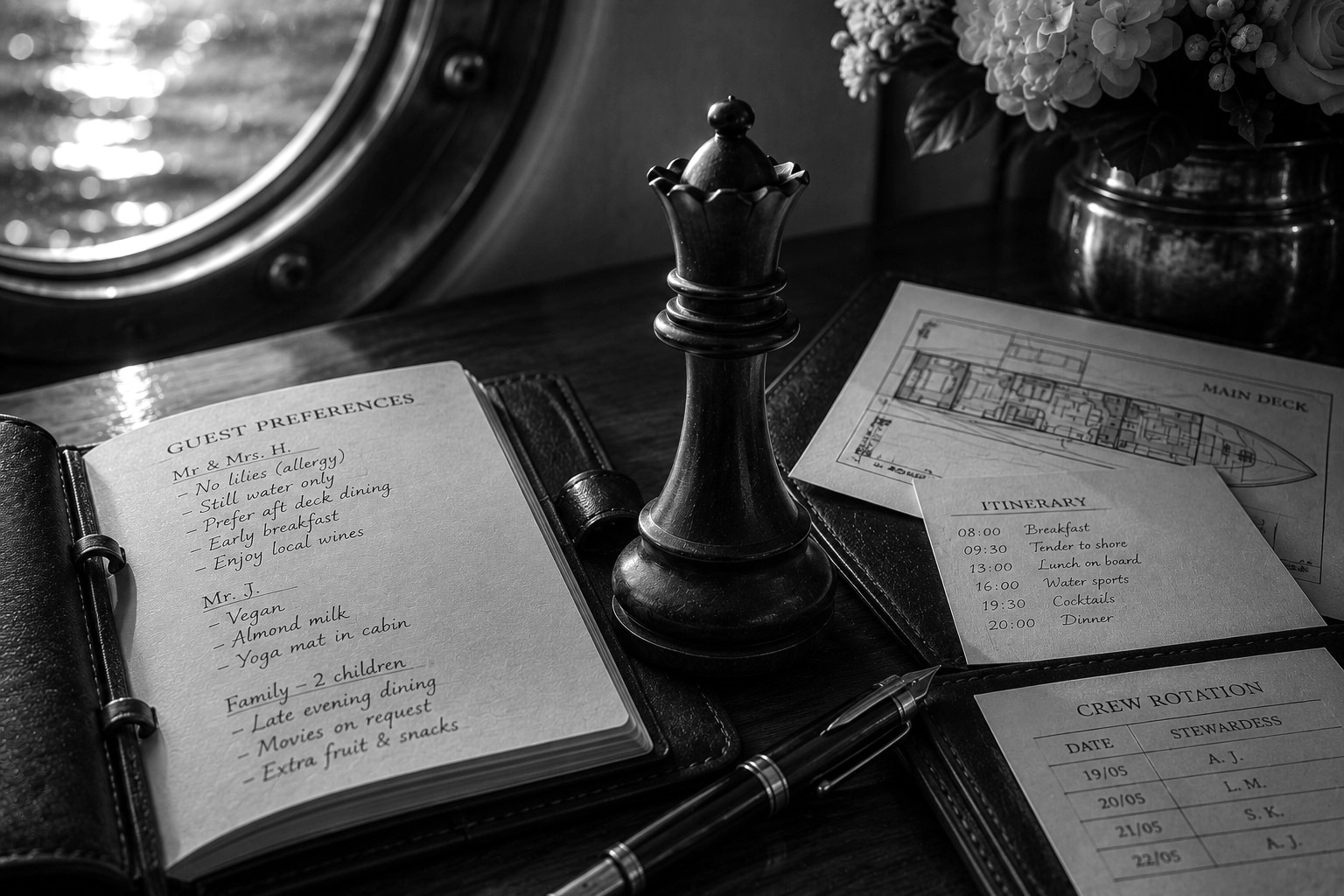
The title is exciting. The salary is rewarding. The responsibility is the part that keeps you awake at three in the morning.
A couple of seasons in, sea legs strong, you know this is the life for you. You've done the back-to-back boss trips and charters, refined your skills, and you look back on your greenie days with a smile at how naïve you were. Maybe you've been planning this for a while. Or maybe it happened out of nowhere, a last-minute Chief Stew opportunity, and suddenly it's yours to take.
Either way, you're ready to step up: Chief Stewardess.
There Isn't a Set Route
Some step up after a few seasons as Second Stewardess, gradually taking on more responsibility. Others get there sooner, often because the Chief leaves mid-season and someone has to fill the gap.
Are you ready?
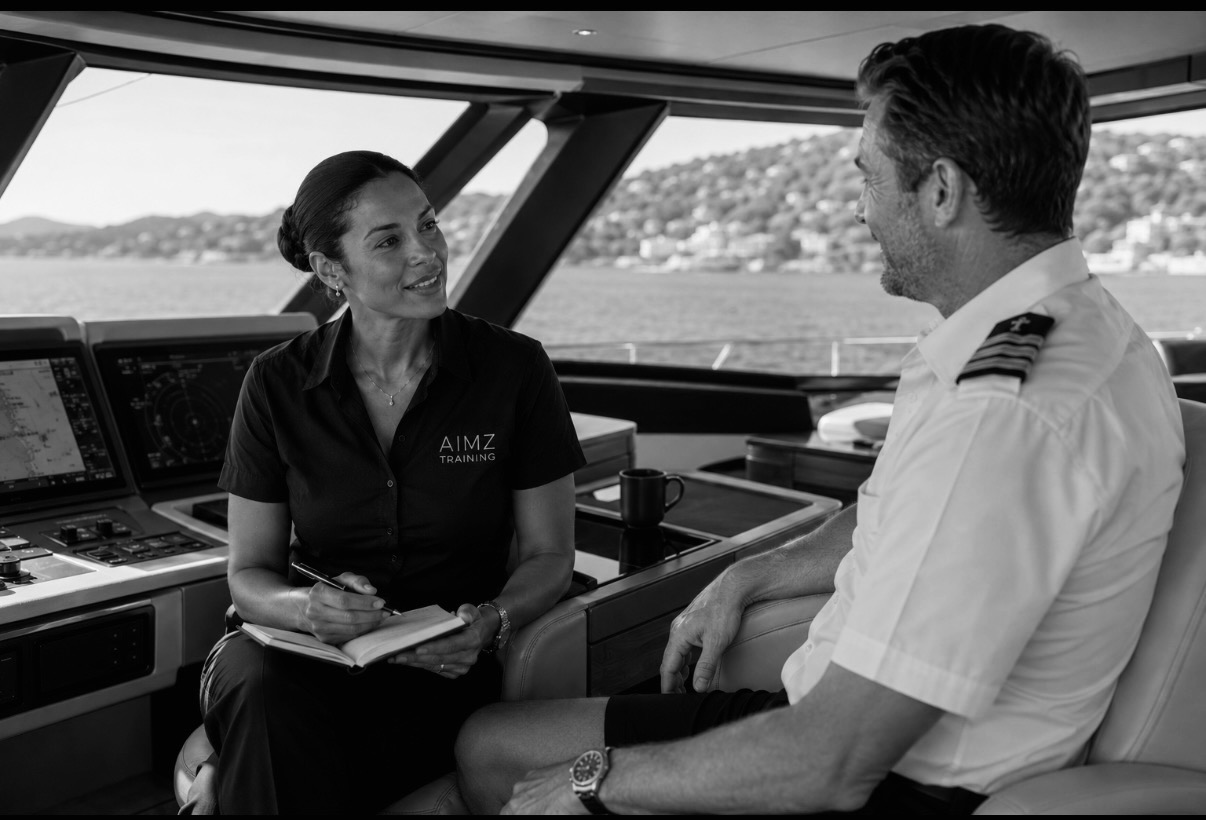
However it happens, the role brings a different set of challenges. You're no longer just getting the job done. You're leading people, managing an interior, and making decisions under pressure, often with no time to think them through.
That's exactly why I created The Art of Leading. Not another course on how to be a stewardess, you already know that, but on the responsibilities that come with the title, so you feel ready for what comes next.
What the Title Actually Demands
By the time you're being considered for Chief Stewardess, you already know the job. You can fold napkins in your sleep, turn around a cabin in a heartbeat, and pour a bottle of wine at exactly the right temperature for its vintage. What you haven't necessarily done yet is lead.
Leadership is about guiding your team. Management is the day-to-day running of the interior.
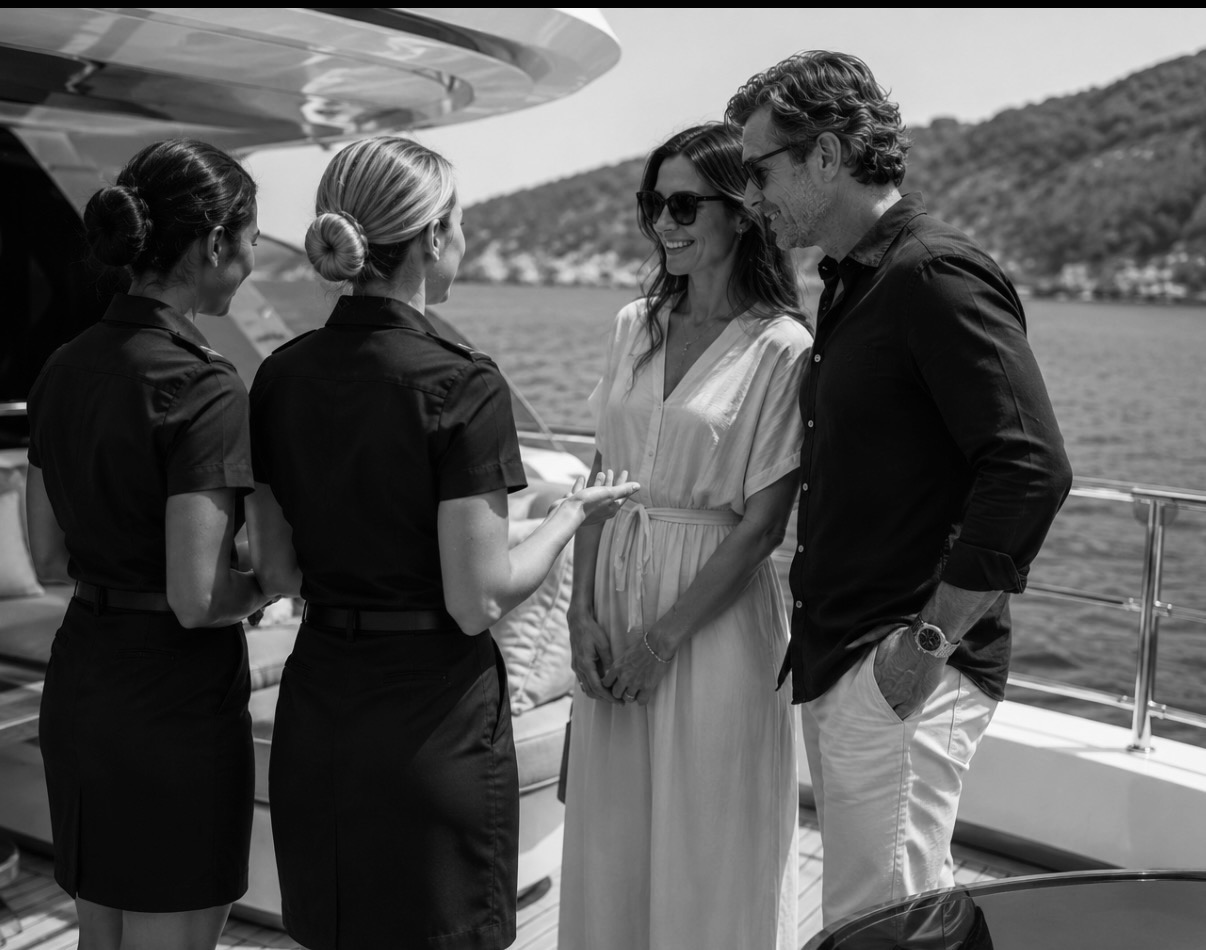
As Chief Stew, you do both, and together they ask a lot more of you than the skills you've spent seasons perfecting.
The Captain walks through the interior before guests arrive expecting to find nothing wrong, and that's on you. Your team is briefed, everything is checked, and if something does go wrong at the last minute, it gets dealt with quietly, before anyone else even notices.
Your interior team might be two people or six. Either way, they're watching how you handle the pressure, and it tells them how they should handle theirs.
That's the job.
When Everything Goes Wrong at Once
There are incredible days as Chief Stew. A guest who genuinely sees you. Whales gliding past at sunrise. And there are days when everything goes wrong at once: ice cream trailed through the salon, Madam raising her voice at you for a mistake that wasn't yours, a problem in the galley you don't have the energy left for.
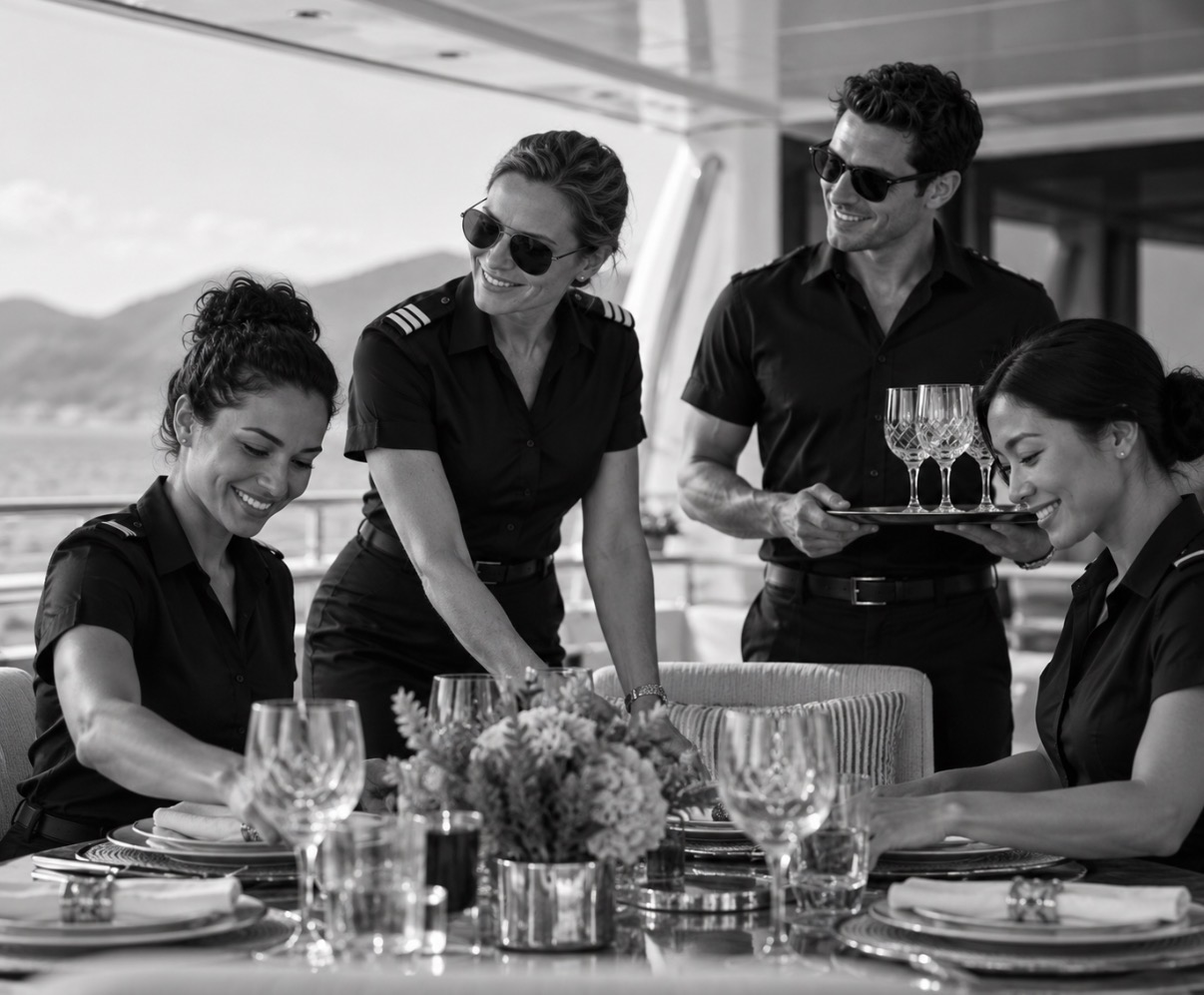
What gets you through those days, season after season, is working alongside your team rather than above them.
Those are the moments nobody trains you for.
As Chief Stew myself, I limited my breaks and still helped out on deck when it mattered. That earned me respect and kept me approachable. There's a thin line between being a leader and being friends, and learning where it sits is part of the job too.
Leadership Isn't One-Size-Fits-All
Every crew is different, and what motivates one stewardess can completely miss the mark with another. Some thrive with independence, others need more guidance before their confidence grows. Learning to tell the difference, and adapting how you lead accordingly, is one of the most valuable skills you'll build as Chief.
Reading people becomes just as important as reading a preference sheet.
If you're reading this because you're thinking about stepping up, or you've already been asked to and aren't sure you're ready, you don't need to have it all figured out first. What matters is being willing to learn the parts of the role a stewardess course doesn't cover. That's where The Art of Leading comes in.